How Long Do Heat Pumps Last in Colorado's Climate?
If your heat pump works through cold Denver mornings and hot summer afternoons, you may eventually wonder how many more seasons it has left. Heat Pumps are different from cooling-only systems because they can work throughout much of the year, providing both heating and cooling. That workload naturally makes homeowners curious about equipment lifespan. At Denver Heat Pump Services, we often remind homeowners that a heat pump does not have a fixed expiration date. Two systems installed in the same year can age very differently because installation, sizing, maintenance, airflow, operating conditions, and repair history all matter. Colorado's weather adds another consideration, but cold winters do not automatically mean a heat pump will wear out early. When homeowners look for Heat Pump Service Denver Co, one of the most useful things we can do is evaluate how the equipment is actually performing instead of judging it only by its age.
How Long Do Heat Pumps Usually Last?
Heat pumps commonly provide many years of heating and cooling, but there is no single lifespan that applies to every system. ENERGY STAR advises homeowners that a heat pump or air conditioner more than 10 years old is one reason to consider whether replacement may be appropriate, but age by itself does not mean equipment has failed or must immediately be replaced. Actual service life depends on installation quality, correct sizing, maintenance, annual runtime, airflow, outdoor conditions, equipment design, and repair history. Because a heat pump can provide both heating and cooling, it may operate during more of the year than a cooling-only air conditioner. In Denver, winter heating demand and summer cooling both contribute to that workload. A properly selected and maintained system may continue performing reliably as it ages, while equipment with installation problems, restricted airflow, repeated breakdowns, or poor maintenance may develop problems earlier. Instead of treating a particular birthday as an expiration date, homeowners should consider age together with reliability, comfort, energy performance, repair frequency, and the overall condition of the system.
Do Heat Pumps Last as Long as Air Conditioners?
Heat pumps and air conditioners share many mechanical similarities, but they do not perform exactly the same job. An air conditioner primarily operates during cooling season. A heat pump can reverse its refrigeration cycle to provide heating during colder weather and cooling during warmer weather.
That means a Denver heat pump may operate throughout much more of the year.
More operating hours can contribute to mechanical wear, but runtime is only one factor affecting lifespan. Equipment design, installation, sizing, maintenance, and environmental conditions can be equally important.
This is why comparing the age of a heat pump directly with the age of a neighbor's air conditioner does not necessarily tell you much. We recommend evaluating each system according to its condition and operating history.
Does Colorado's Climate Affect Heat Pump Lifespan?
Colorado's climate affects how heat pumps operate, but it does not create a universal lifespan for the equipment. Denver homes can experience cold winter weather followed by substantial summer cooling demand. A heat pump may therefore work during both major seasons. Winter introduces snow, ice, freezing temperatures, and greater heating demand. Summer introduces heat, long cooling cycles, dust, and outdoor debris.
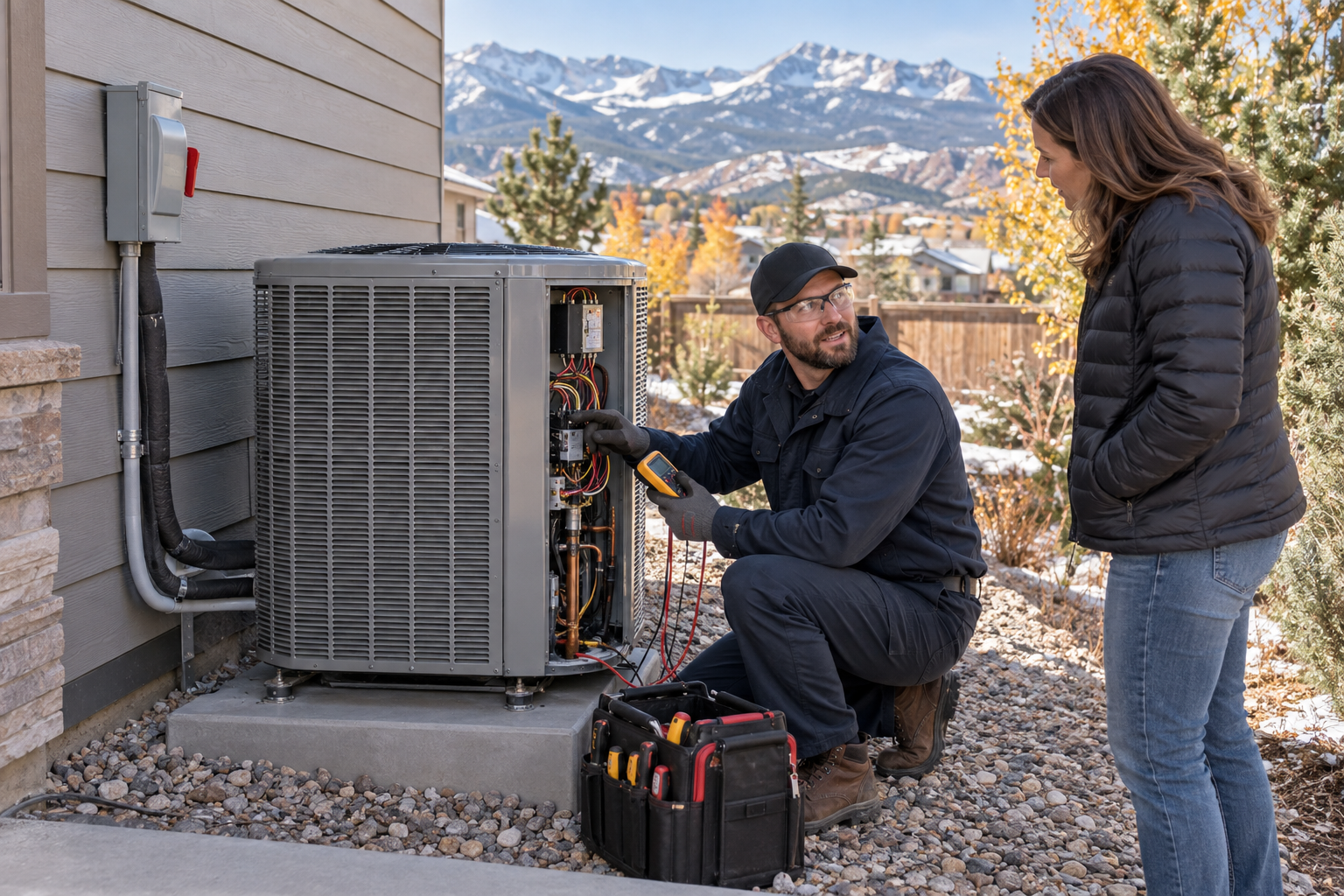
The outdoor unit is designed to operate outside, but it still needs appropriate airflow and maintenance.
Colorado's temperature changes also make equipment selection important. A heat pump intended for a milder climate may perform differently during cold weather than equipment specifically designed and rated for stronger low-temperature heating performance. Rather than asking whether Colorado weather is "bad" for heat pumps, we think the better question is whether the equipment is properly selected, installed, and maintained for Colorado conditions.
Do Heat Pumps Work Well in Colorado Winters?
Modern heat pumps can provide effective heating in cold climates when the equipment is appropriately selected and sized. The U.S. Department of Energy explains that advances in air-source heat pump technology have made these systems a practical heating alternative even in regions that experience extended periods of subfreezing temperatures. Modern cold-climate systems may use variable-speed compressors and other technology to maintain stronger heating performance as temperatures fall.
However, not every heat pump provides identical cold-weather capacity.
The amount of heat a particular system can deliver can change as the outdoor temperature falls. That is why we look at manufacturer performance data and the home's heating requirements when selecting equipment for Denver. Some systems may also incorporate supplemental heating depending on the home, equipment, and system design. The important point is that cold weather alone does not make heat pumps unsuitable for Colorado.
Does Cold Weather Make a Heat Pump Wear Out Faster?
Cold weather can increase heating demand and operating time, but that does not mean normal winter operation is damaging the equipment. A heat pump designed for cold-weather use is expected to run during winter. Longer cycles can actually be normal, particularly with variable-capacity equipment designed to operate steadily rather than repeatedly turning on and off.
Problems arise when something prevents the system from operating as designed.
Restricted airflow, incorrect sizing, dirty components, installation problems, or equipment faults can increase stress or reduce performance. Homeowners should therefore avoid judging their heat pump simply by how long it runs. If it operates for long periods while maintaining a comfortable indoor temperature, that may be normal. If it runs continuously while the house becomes colder or develops unusual sounds, heavy icing, or other problems, an inspection makes sense.
How Does Denver's Summer Weather Affect a Heat Pump?
Winter gets much of the attention when people discuss heat pumps in Colorado, but summer matters too.
During warm weather, a heat pump operates much like a conventional central air conditioner by moving heat from inside the house to the outdoors. Hot afternoons can produce long cooling cycles.
Proper airflow becomes particularly important during these periods. A heavily clogged filter or dirty indoor or outdoor coil can interfere with heat transfer and system performance.
Thermostat habits can also affect runtime.
Constantly demanding major temperature changes may cause the system to operate differently from a household that maintains relatively consistent settings. This year-round workload is one reason routine maintenance matters for heat pumps. We are not only preparing the equipment for winter. We also want it ready to cool the home when Denver temperatures climb.
What Factors Affect How Long a Heat Pump Lasts?
Installation quality is one of the most important factors. Even excellent equipment can develop problems when it is incorrectly installed. Sizing matters as well. Equipment should be selected according to the heating and cooling requirements of the house rather than simply choosing the largest unit available.
Airflow is another major consideration. Dirty filters, restrictive ductwork, blocked registers, and dirty coils can interfere with the system's ability to move air and transfer heat.
Maintenance helps identify developing issues before they become larger problems.
The outdoor environment matters too. Leaves, vegetation, debris, snow accumulation, and physical damage can interfere with the outdoor unit. When homeowners schedule Heat Pump Service, we also look at how the system is behaving. New noises, changes in airflow, unusual cycling, comfort problems, or repeated repairs can tell us much more than equipment age alone.
Does Heat Pump Size Affect Its Lifespan?
Yes, sizing can influence how the system operates and how comfortable the home feels.
A common assumption is that a larger heat pump is automatically better because it has more capacity.
That is not necessarily true. Oversized equipment may cycle differently and can create comfort or efficiency problems. Undersized equipment may struggle to satisfy the building's heating or cooling requirements under demanding conditions.
ENERGY STAR recommends that contractors determine appropriate HVAC equipment size using a load calculation such as ACCA Manual J rather than relying solely on the size of the old system.
This becomes particularly important when replacing equipment. A home's heating and cooling load may have changed because of insulation improvements, window replacements, additions, air sealing, or other renovations. Proper sizing gives the heat pump a better opportunity to operate the way it was designed.
Does Regular Maintenance Extend the Life of a Heat Pump?
Regular maintenance can help protect heat pump performance and identify problems before they become more serious, although no maintenance program can guarantee a specific number of additional years.
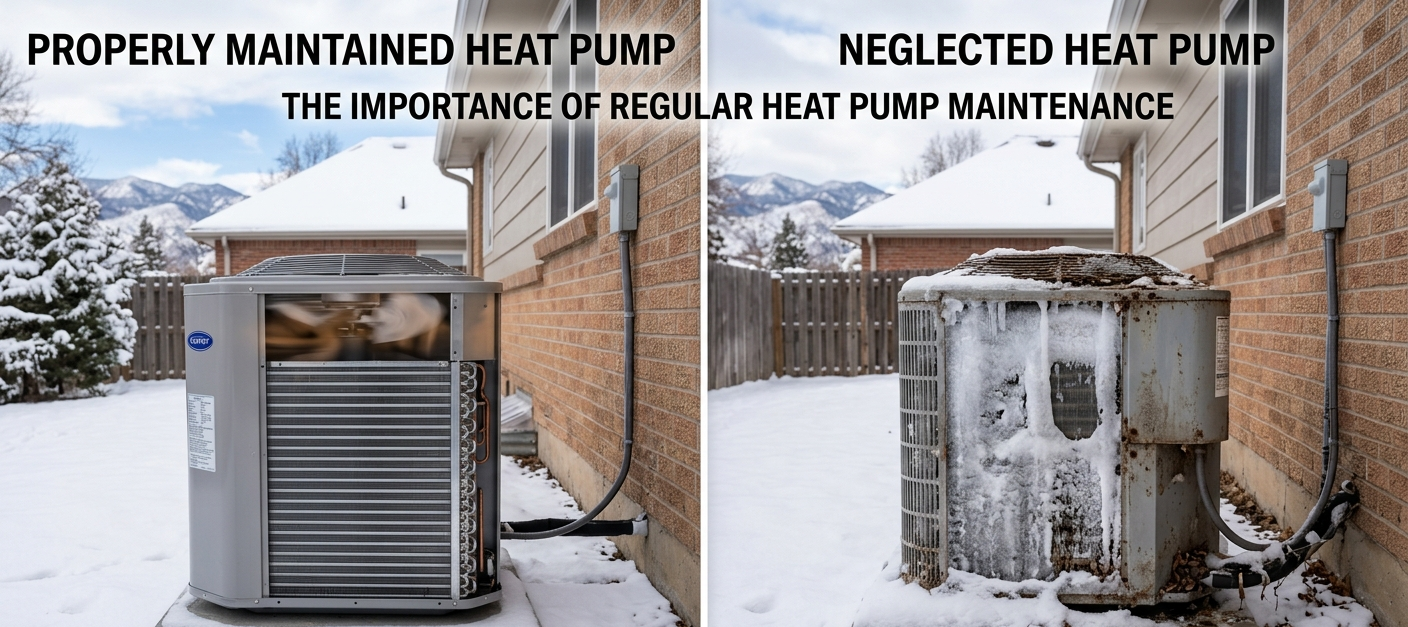
The U.S. Department of Energy notes that the difference between the energy consumption of a well-maintained heat pump and a severely neglected one can be significant.
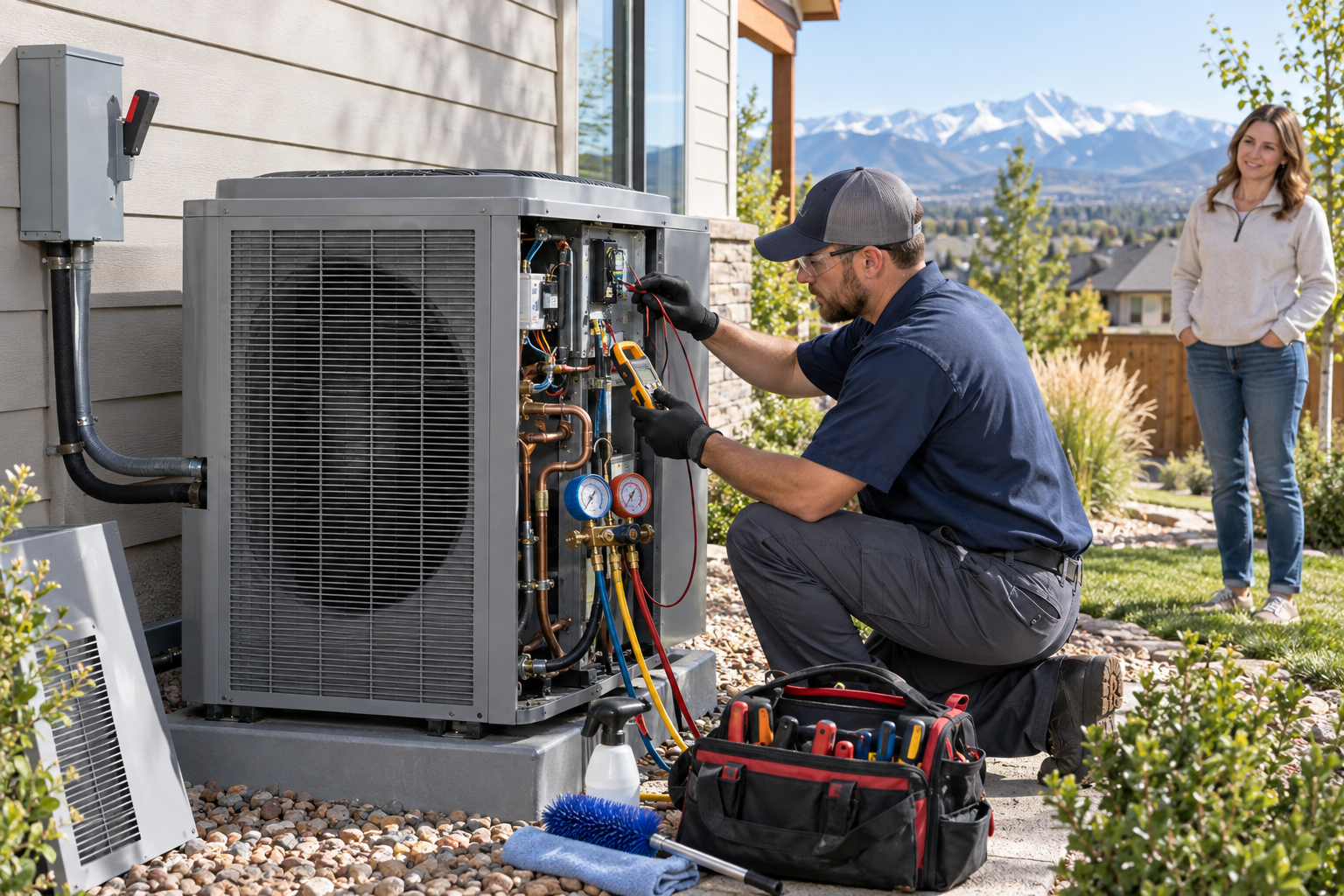
DOE recommends attention to filters, coils, fans, airflow, refrigerant charge, electrical connections, controls, and other system components as appropriate. Some tasks are simple enough for homeowners. Filter maintenance is one example. Keeping the outdoor unit reasonably clear of debris is another.
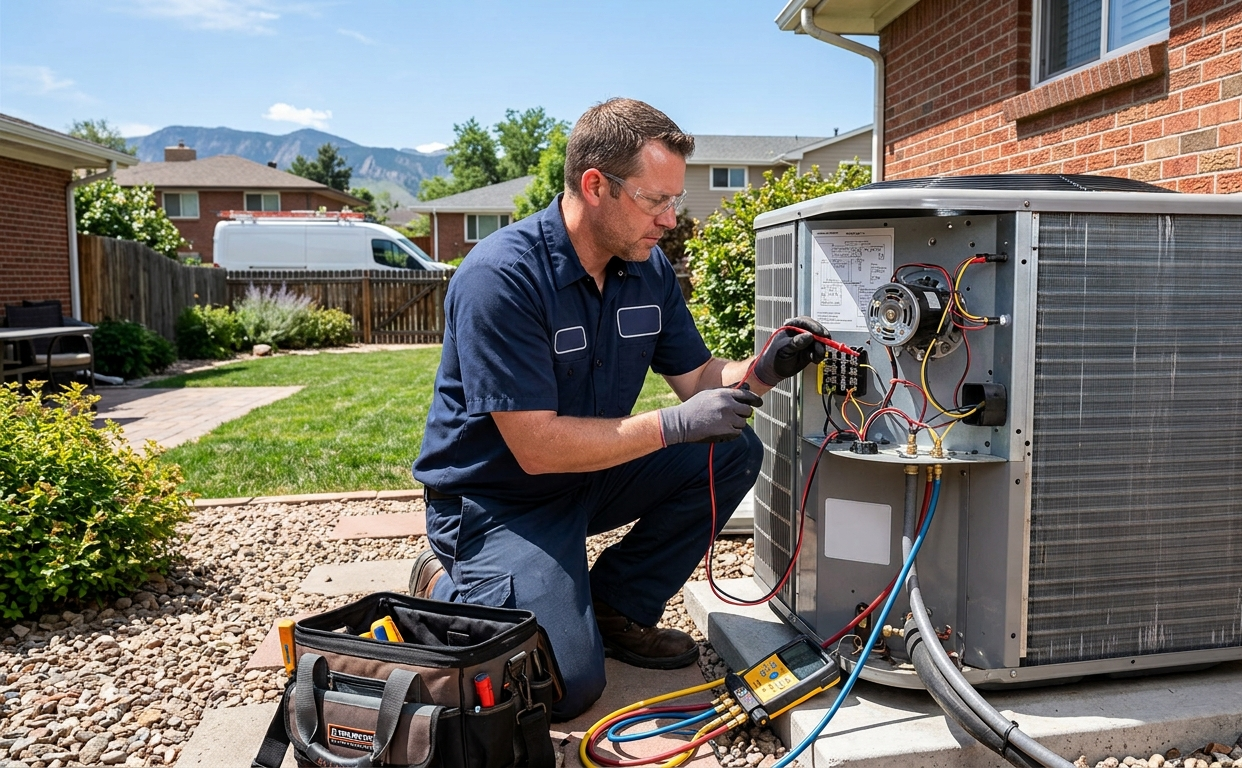
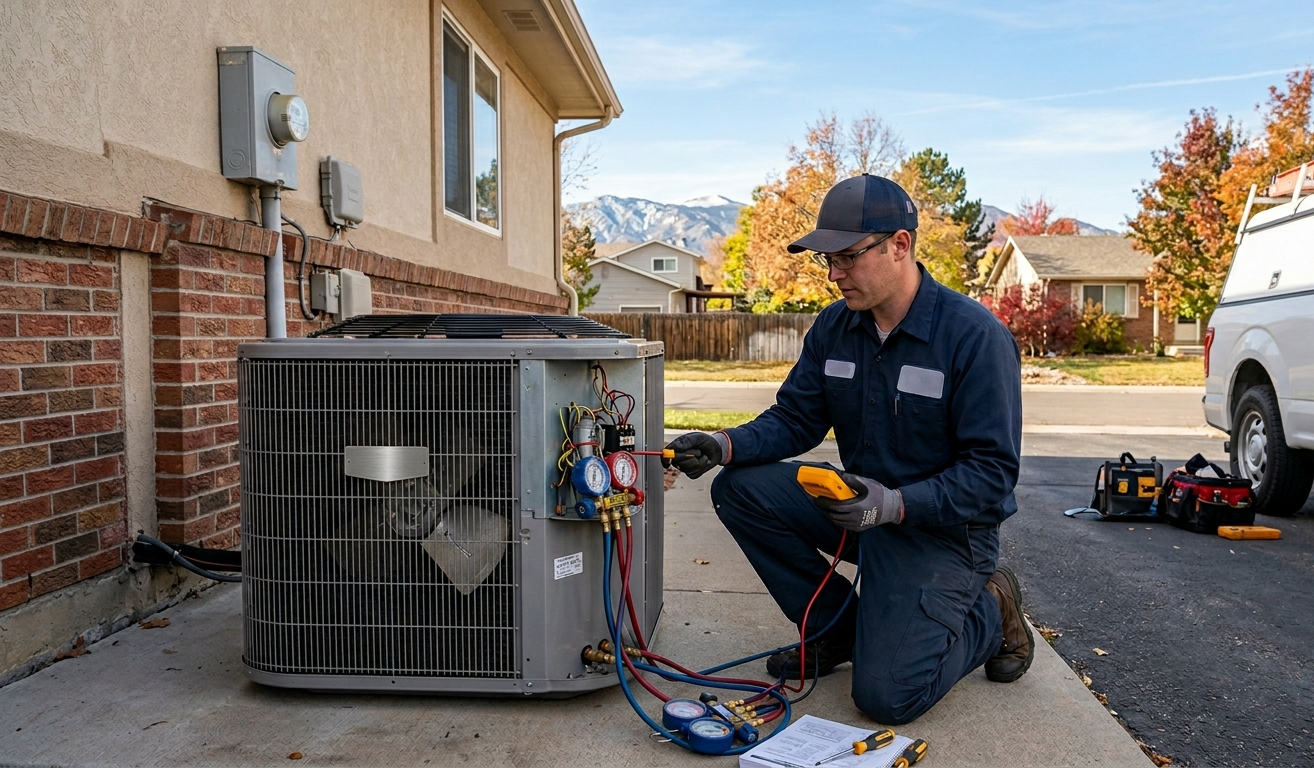
Other work requires HVAC training and equipment. Professional maintenance can help identify electrical deterioration, airflow concerns, refrigerant-related issues, and other developing problems. We view maintenance as preventive care rather than a guarantee. It cannot stop every component from eventually wearing out, but it can help the system operate under better conditions.
How Often Should a Heat Pump Be Serviced?
The appropriate maintenance schedule depends on the equipment manufacturer, system design, usage, and operating conditions. Because heat pumps provide both heating and cooling, they deserve regular attention throughout their operating life. Homeowners should follow the maintenance schedule provided by the equipment manufacturer. Filters may need attention more frequently than professional service visits. How often they need replacement or cleaning depends on the filter, household conditions, system runtime, pets, dust, and manufacturer instructions.
Professional service can examine components homeowners cannot safely or effectively evaluate themselves. If your system suddenly develops unusual behavior, there is no reason to wait for the next routine maintenance visit. New noises, poor heating or cooling, persistent icing, repeated breaker problems, or unexpected cycling deserve attention when they occur.
What Heat Pump Maintenance Can Homeowners Do Themselves?
Start with the air filter. Check it regularly and replace or clean it according to the equipment and filter manufacturer's recommendations. Next, look at the outdoor unit. Leaves, grass clippings, and other debris should not be allowed to obstruct airflow. Vegetation should also be kept from crowding the equipment.
Inside the home, keep supply registers and return grilles unobstructed by furniture or other objects.
Pay attention to the way the system sounds and operates.
Homeowners often notice changes before a technician does because they hear the equipment every day. A new vibration, unusual noise, or noticeable reduction in comfort is worth remembering. More technical work should be left to qualified HVAC professionals. Refrigerant systems, electrical components, and internal mechanical repairs are not appropriate do-it-yourself maintenance projects.
Should You Cover a Heat Pump During a Denver Winter?
Do not completely wrap or cover an operating heat pump. The outdoor unit needs airflow to exchange heat with the outside air. Blocking that airflow can interfere with normal operation. The unit is designed for outdoor conditions, including winter weather. However, excessive snow accumulation around the equipment can create problems if it restricts airflow.
Keep the surrounding area reasonably clear while being careful not to damage the coil or other components. If ice has formed on the unit, do not attack it with sharp tools. Heat pumps normally develop some frost during heating operation and use a defrost cycle to remove it. A solid accumulation of ice that does not clear is a different situation and may require professional evaluation.
Is Frost on a Heat Pump Normal?
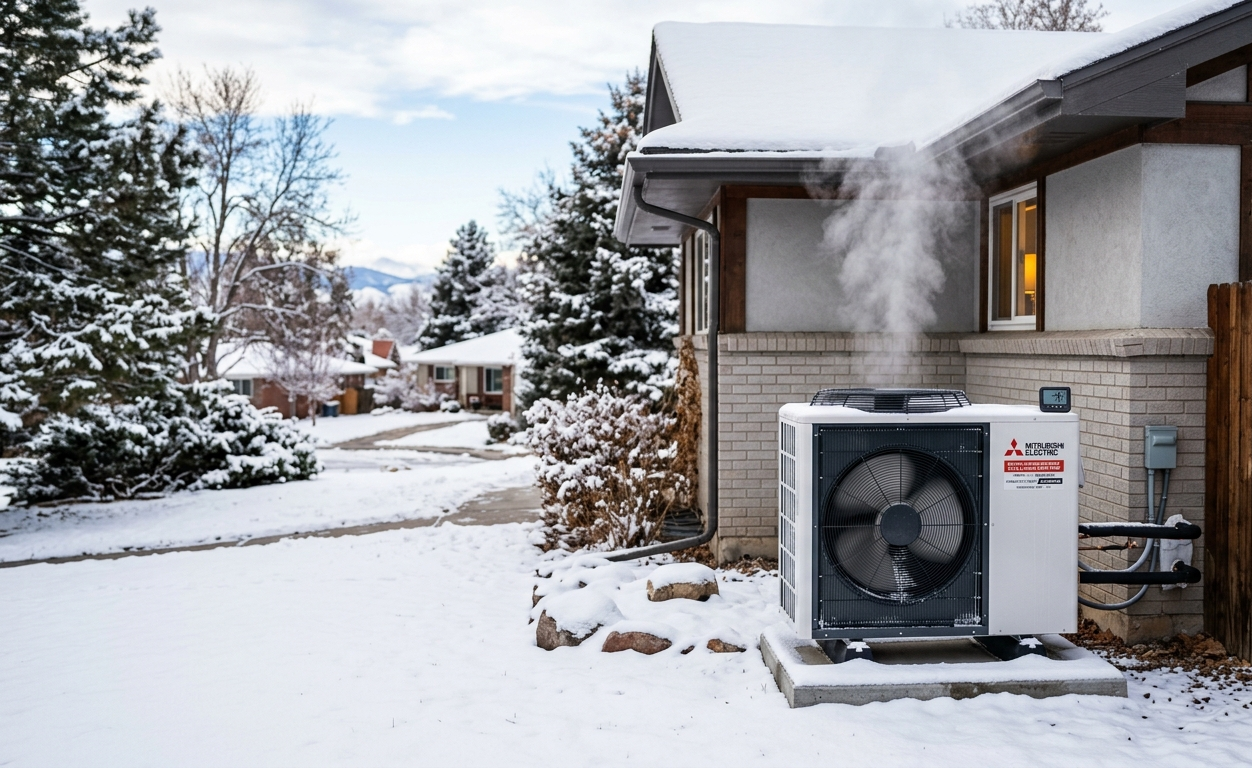
Some frost can be completely normal. During winter heating, the outdoor coil can become cold enough for moisture in the air to freeze on its surface. Heat pumps account for this with a defrost cycle.
During defrost, the system temporarily changes operation to warm the outdoor coil and melt accumulated frost. You may notice changes in sound or see steam rising from the unit during this process.
That does not automatically indicate a problem.
Persistent heavy ice is different. If the outdoor unit becomes covered in substantial ice that does not clear, airflow may be restricted, or the system may have a mechanical, control, or refrigerant-related problem.
If heating performance also declines, professional service is appropriate.
What Are the Signs a Heat Pump Is Wearing Out?
Increasing repair frequency is one important sign. A single component failure does not mean the entire system is near the end of its life. Several unrelated failures over a relatively short period deserve more attention. Declining comfort can also indicate a problem. The heat pump may struggle to maintain temperature, run differently than it used to, or produce inconsistent heating and cooling.
New or worsening noises should be investigated.
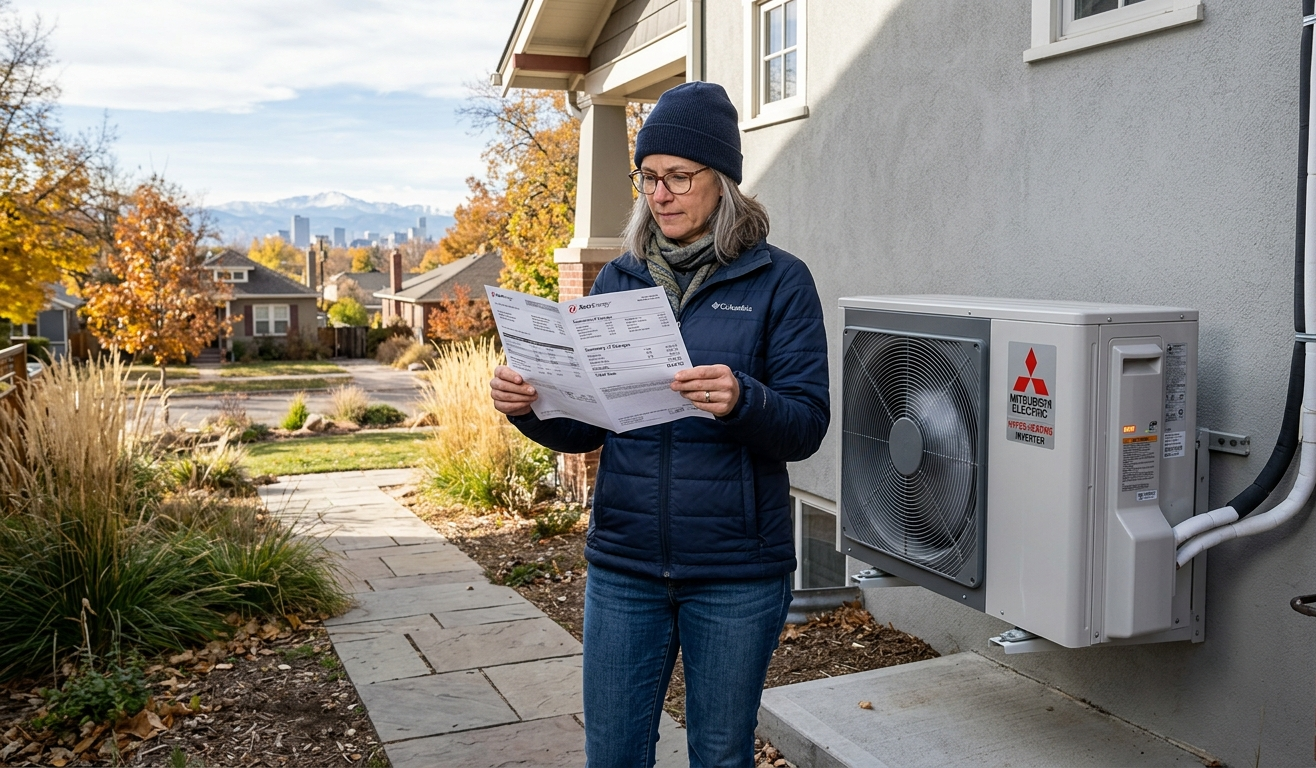
Changes in electricity consumption can provide another clue, although utility bills need to be considered alongside weather, electricity rates, thermostat settings, and household behavior. Physical deterioration and major component failures also matter. These symptoms should lead to diagnosis, not an automatic replacement decision. We want to know why the system is behaving differently before deciding what should happen next.
Is It Worth Repairing an Older Heat Pump?
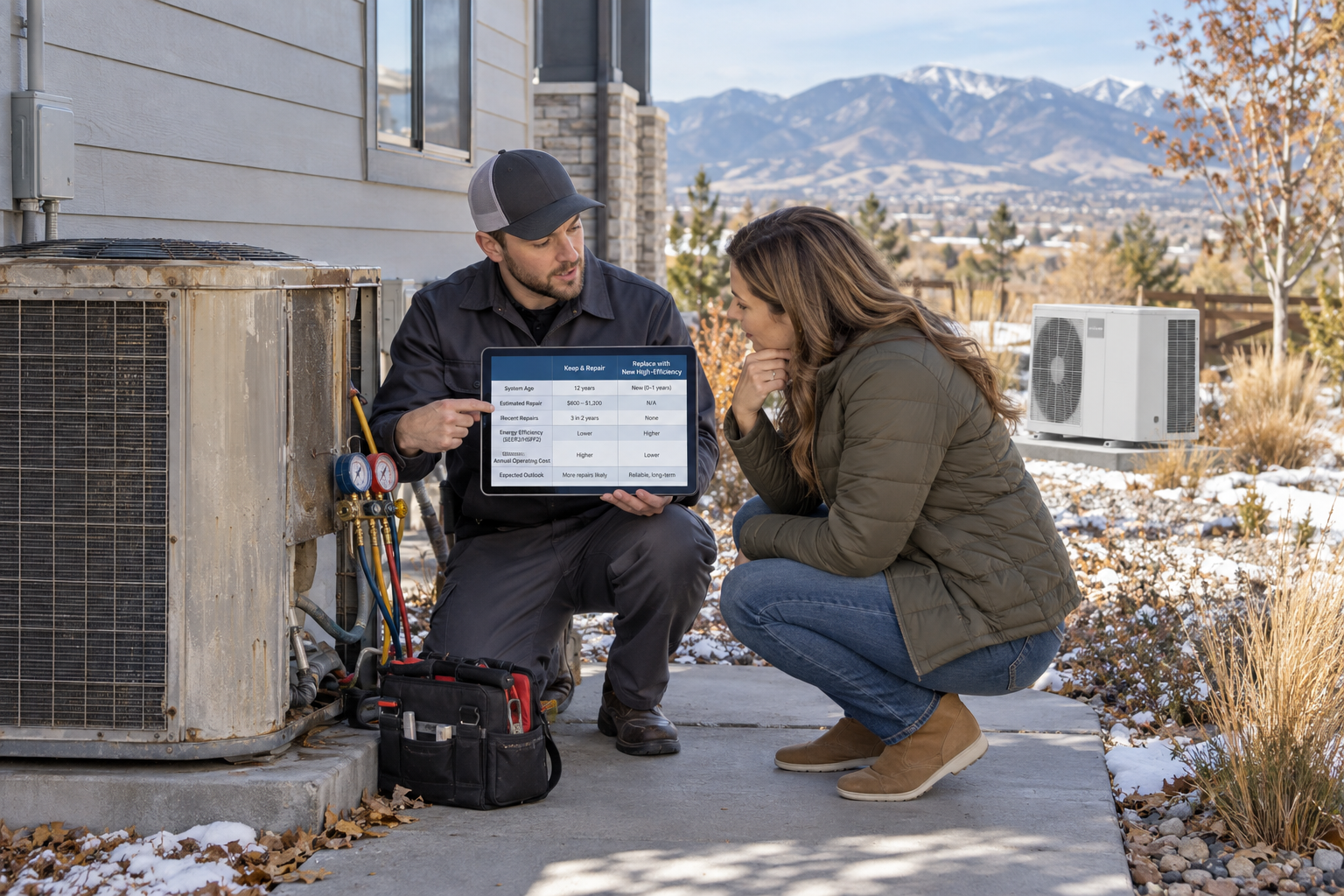
Sometimes it is. An older heat pump that has been dependable and needs a relatively modest repair may still have useful service ahead. A different calculation applies when the system has experienced several recent failures or requires a major repair while other components are also deteriorating.
Warranty coverage, parts availability, efficiency, refrigerant, comfort, and equipment condition should all be considered.
Think about reliability too. If you are repeatedly scheduling emergency repairs during extreme weather, the inconvenience becomes part of the ownership cost. We do not recommend replacing equipment solely because it is old. Instead, age should increase the level of scrutiny when a significant repair is needed.
Can a Heat Pump Last Longer Than Expected?
Yes. Mechanical equipment does not follow an exact calendar. A heat pump that was correctly sized, properly installed, regularly maintained, and operated under reasonable conditions may remain dependable beyond a homeowner's original expectations. Good airflow helps. Timely repairs help.
Keeping outdoor equipment clear of debris and following manufacturer maintenance recommendations can also support proper operation.
But an unusually long-lasting system should not become the standard against which every heat pump is judged. Two homes can place very different demands on similar equipment. The goal should be dependable, efficient performance rather than reaching a particular age simply for the sake of saying the equipment lasted that long.
What Can Shorten the Life of a Heat Pump?
Neglect can create unnecessary stress on HVAC equipment. A severely dirty filter can restrict airflow. Dirty coils can interfere with heat transfer. Electrical problems can damage components if they remain unresolved. Improper refrigerant charge can also affect performance and equipment operation.
Installation problems are another concern. Incorrect sizing, poor ductwork, inadequate airflow, and improper setup can cause trouble even when the heat pump itself is high quality.
Physical obstruction around the outdoor unit matters as well. Leaves, landscaping, debris, and excessive snow accumulation can interfere with airflow. Repeatedly ignoring warning signs can allow a manageable problem to become more serious. The earlier an unusual condition is correctly diagnosed, the better chance you have of addressing the actual cause rather than allowing related problems to develop.
Does Replacing Your Air Filter Help Your Heat Pump Last Longer?
Filter maintenance supports proper airflow and helps keep airborne material from accumulating within parts of the HVAC system. A heavily loaded filter increases resistance to airflow. That can reduce performance and cause the system to operate under conditions different from those intended by the manufacturer. However, the answer is not simply to install the thickest or most restrictive filter available.
Filters have different airflow characteristics, and the HVAC system needs to be capable of moving air through the selected filter. Follow equipment recommendations and ask an HVAC professional if you are unsure which filter is appropriate. Filter replacement frequency also varies. A home with pets or significant dust may require different attention from a home with fewer airborne contaminants.
Can a Smart Thermostat Extend Heat Pump Life?
A smart thermostat can help manage temperature schedules and provide convenient control, but it should not be viewed as a device that automatically adds years to a heat pump. Compatibility matters.
Some variable-speed or communicating heat pumps rely on specific controls to access all of their operating features. Thermostat strategy also matters with heat pumps. Large temperature setbacks can sometimes cause supplemental heating to operate depending on the system and control strategy.
A well-configured thermostat can help the equipment operate according to household needs, but it cannot correct dirty coils, poor sizing, leaking ductwork, or mechanical problems. If you are replacing a thermostat, confirm that the new control is appropriate for your heat pump before installation.
When Should You Start Planning for Heat Pump Replacement?
You do not need to wait until the equipment completely stops working. Planning can make sense when an aging heat pump begins requiring more frequent repairs or shows a sustained decline in performance.
This does not mean replacement needs to happen immediately. It means you can start researching your options before an emergency. You will have more time to compare equipment, understand cold-weather heating capacity, evaluate electrical requirements, inspect ductwork, and consider efficiency.
Planning is particularly useful when major components are deteriorating, or replacement parts are becoming more difficult or expensive to obtain. When homeowners contact us for Heat Pump Service Denver Co, we can help them understand whether the system appears generally healthy, needs maintenance or repair, or is reaching the point where planning for replacement would be reasonable.
Why Choose Denver Heat Pump Services
At Denver Heat Pump Services, we focus on heat pump systems and the heating and cooling demands Denver homes experience throughout the year. We do not judge a system only by the date on its equipment label. We look at how it is operating. That means considering heating and cooling performance, airflow, equipment condition, repair history, cold-weather behavior, sizing, and maintenance needs.
When a repair makes sense, homeowners should understand why. When replacement deserves consideration, they should understand that too.
Our approach to Heat Pump Service Denver Co is centered on clear information rather than making equipment age sound more alarming than it is. Denver's climate also means cold-weather performance deserves specific attention. A heat pump that works well during a mild afternoon still needs to satisfy the home's heating needs when temperatures fall. Whether we are maintaining an existing system, diagnosing a problem, or helping a homeowner plan for future replacement, our goal is to explain what we find in straightforward language so homeowners can make informed decisions about their equipment.
Frequently Asked Questions About Heat Pump Lifespan
Do heat pumps wear out faster because they run all year?
Year-round heating and cooling can increase total runtime compared with cooling-only equipment. However, lifespan also depends on installation, sizing, equipment design, maintenance, climate, and operating conditions.
Does Denver's altitude affect heat pump performance?
Elevation can be a consideration in HVAC system design and equipment selection. Manufacturer performance information and proper system design should be used rather than assuming every system behaves identically at every elevation.
Is it bad for a heat pump to run continuously in cold weather?
Not automatically. Heat pumps may operate for long periods during cold conditions. If the home remains comfortable and the equipment is operating normally, long cycles may be expected. Continuous operation combined with poor heating deserves evaluation.
Does frequently changing the thermostat wear out a heat pump?
Frequent or large temperature changes can affect how the system operates, but the impact depends on the equipment and controls. Consistent settings are often easier for a heat pump to manage.
Can snow damage an outdoor heat pump?
Normal snow exposure does not automatically damage outdoor equipment. Problems can arise if heavy accumulation restricts airflow or physically affects the unit.
Does a heat pump last longer if it has backup heat?
Not necessarily. Backup heating can affect how a system operates during certain conditions, but equipment lifespan still depends on many other factors.
Can replacing ductwork help a heat pump last longer?
Correcting serious duct and airflow problems can help equipment operate as designed. However, duct replacement is not automatically necessary whenever a heat pump is installed or serviced.
Should I replace a heat pump just because it is old?
No. Age is one consideration. Reliability, repair history, comfort, efficiency, parts availability, and overall condition should also influence the decision.
Final Thoughts
Heat Pumps do not come with a universal expiration date. Colorado's climate influences how they operate because the same equipment may work through cold winter conditions and warm summer afternoons. That does not mean Denver weather automatically causes premature failure. Installation quality, proper sizing, airflow, equipment selection, maintenance, and operating conditions all influence how a heat pump ages.
Homeowners can help by paying attention to filters, keeping outdoor equipment reasonably clear, and responding when the system begins behaving differently. Regular professional maintenance can also identify developing issues and help the equipment continue operating as intended.
Most importantly, do not judge your heat pump only by its age.
An older system that remains reliable and comfortable may still have useful service ahead. An equipment problem that appears much earlier may deserve attention regardless of age. Watch the whole picture: performance, comfort, repairs, energy use, and equipment condition. That gives you a much better understanding of whether your heat pump simply needs maintenance, requires a repair, or is approaching the time when replacement planning makes sense.
Help Your Heat Pump Keep Doing Its Job
Want to know how your heat pump is holding up after years of Denver heating and cooling? Reach out to Denver Heat Pump Services for a system evaluation. We can check its condition, identify maintenance concerns, and help you understand what may support dependable performance in the seasons ahead.
Learn more about our heat pump services through our articles below:
- Why Regular Heat Pump Service in Denver CO Can Save You Thousands
- What Does It Cost to Have a Heat Pump Serviced
- Signs Your Heat Pump Is Near the End of Its Lifespan